AI and Climate Change: How Technology Is Fighting Global Warming
AI and Climate Change: How Technology Is Fighting Global Warming
Climate change is the defining challenge of our generation. And while AI alone will not solve it, it is becoming one of the most powerful tools we have. From predicting extreme weather to optimizing energy grids to discovering new materials, AI is accelerating climate solutions that would take decades with traditional methods.
Here is where AI is making the biggest difference right now.
Energy Grid Optimization
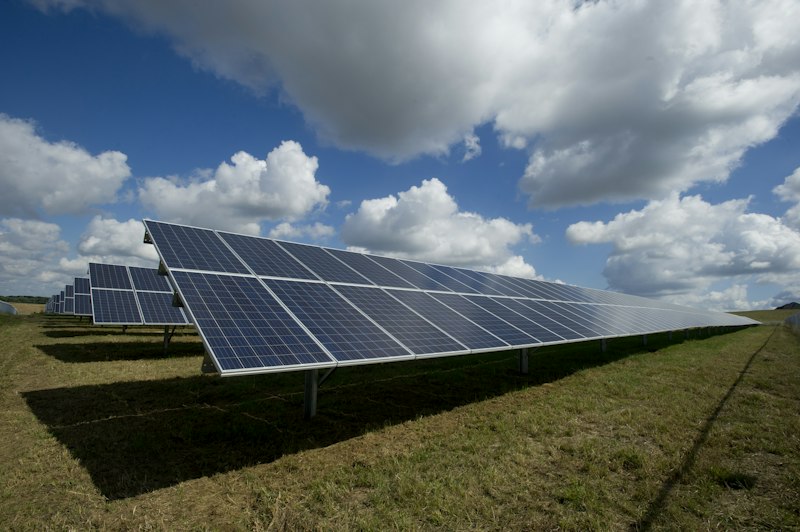
Aerial view of solar panels and wind turbines in a vast renewable energy farm, with power lines stretching to the horizon
The biggest challenge with renewable energy is intermittency -- the sun does not always shine and the wind does not always blow. AI is solving this.
How AI Manages the Grid
- •Demand prediction: AI forecasts electricity demand with 97%+ accuracy by analyzing weather patterns, time of day, economic activity, and historical usage
- •Supply prediction: AI predicts solar and wind output hours or days in advance, allowing grid operators to plan accordingly
- •Storage optimization: AI decides when to charge and discharge battery systems to maximize renewable usage and minimize waste
- •Dynamic pricing: AI-driven pricing encourages consumers to use electricity when renewable supply is high
Real Impact
Google's DeepMind reduced the energy used for cooling its data centers by 40% using AI -- saving hundreds of millions of dollars and preventing massive CO2 emissions. The same principles are being applied to buildings, factories, and entire cities.
| Application | Energy Savings | CO2 Reduction |
| --- | --- | --- |
| Data center cooling | 30-40% | Millions of tons annually |
| Building HVAC | 15-25% | Significant per building |
| Industrial processes | 10-20% | Varies by industry |
| Grid balancing | N/A | Enables 30-50% more renewables |
Weather and Climate Prediction

Visualization of a hurricane tracking model with multiple predicted paths shown as colored lines converging, overlaid on a satellite image
The GraphCast Revolution
Google DeepMind's GraphCast AI weather model predicts weather up to 10 days ahead more accurately than traditional physics-based models -- and does it in minutes instead of hours.
Why this matters for climate:
- •Extreme weather warnings: Better predictions mean earlier evacuations and preparations for hurricanes, floods, and heat waves
- •Agricultural planning: Farmers can make better decisions about planting, irrigation, and harvesting
- •Renewable energy: More accurate wind and solar forecasts mean less reliance on fossil fuel backup
- •Insurance and risk: Better climate models help communities plan for and adapt to changing conditions
Climate Modeling
Traditional climate models divide the Earth into grid cells of 25-100 km. AI is enabling "downscaling" to 1-5 km resolution, revealing local impacts that global models miss:
- •Which neighborhoods are most vulnerable to flooding
- •How local microclimates will shift over decades
- •Where to place renewable energy installations for maximum output
- •How specific ecosystems will respond to temperature changes
Materials Discovery

Scientist working in a laboratory with molecular models and computer screens showing AI-generated material structures
One of the most exciting applications of AI in climate tech is discovering entirely new materials.
Better Batteries
The world needs dramatically better batteries for electric vehicles and grid storage. AI is accelerating the search:
- •Google DeepMind's GNoME discovered 2.2 million new crystal structures, including 380,000 stable materials that could be used in batteries, solar cells, and superconductors
- •Traditional discovery: Testing a single new material composition takes weeks. AI predicts stability in seconds
- •Solid-state batteries: AI is helping identify materials for solid-state batteries that could double EV range and charge in minutes instead of hours
Carbon Capture Materials
AI is designing new materials for capturing CO2 from the air:
- •Metal-organic frameworks (MOFs) are molecular sponges that absorb CO2. There are millions of possible MOF configurations -- AI identifies the most promising ones without synthesizing all of them
- •Direct air capture systems use these materials to pull CO2 directly from the atmosphere. AI-designed sorbents could make this process 50% more energy-efficient
Sustainable Manufacturing
- •Cement alternatives: Cement production accounts for 8% of global CO2 emissions. AI is helping design low-carbon concrete formulations
- •Steel production: AI optimizes steel manufacturing processes to reduce energy consumption and emissions by 10-15%
- •Plastic replacements: AI is designing biodegradable polymers that match the properties of conventional plastics
Agriculture and Food

Drone flying over agricultural fields with AI-powered sensors analyzing crop health, showing color-coded areas indicating different conditions
Agriculture is responsible for about 25% of global greenhouse gas emissions. AI is helping reduce this footprint.
Precision Agriculture
- •Satellite + AI monitoring tracks crop health across millions of acres, identifying problems weeks before they are visible to the human eye
- •Variable rate application: AI tells tractors to apply different amounts of water, fertilizer, and pesticide to different parts of a field based on actual need -- reducing chemical use by 20-30%
- •Yield prediction: AI forecasts crop yields months in advance, reducing food waste from overproduction
- •Livestock monitoring: AI-powered sensors track animal health and behavior, optimizing feed and reducing methane emissions
Food Waste Reduction
One-third of all food produced globally is wasted. AI helps at every stage:
| Stage | AI Application | Impact |
| --- | --- | --- |
| Farm | Harvest timing optimization | 10-15% less waste |
| Transport | Route and temperature optimization | 5-10% less spoilage |
| Retail | Demand forecasting | 20-30% less overstock |
| Consumer | Smart kitchen apps | Personalized reduction |
Transportation
Electric Vehicle Optimization
AI is making EVs more practical:
- •Battery management systems use AI to extend battery life by 20-30% through optimized charging patterns
- •Route planning for commercial EV fleets minimizes energy consumption by considering terrain, traffic, weather, and charging station locations
- •Autonomous driving could reduce emissions by 10-15% through smoother driving patterns and less congestion
Logistics
AI optimizes shipping routes, reduces empty truck miles, and enables more efficient last-mile delivery. UPS's AI routing system (ORION) saves 100 million miles annually -- equivalent to 100,000 metric tons of CO2.
The Carbon Footprint of AI Itself
We need to be honest: AI is not carbon-neutral.

Server room with rows of computing equipment, illustrating the energy infrastructure required to power AI systems
- •Training GPT-4 is estimated to have produced hundreds of tons of CO2
- •Global data centers consume about 1-2% of world electricity
- •AI inference (running models) is growing exponentially
Is the trade-off worth it?
The consensus among climate researchers is: yes, if AI is deployed thoughtfully.
The energy used to train a large AI model is a one-time cost. If that model then optimizes a power grid that saves millions of tons of CO2 annually, the math works overwhelmingly in favor of AI.
But the industry needs to:
- 1Power AI training with renewables -- Microsoft, Google, and others have committed to 100% renewable energy for data centers
- 2Make models more efficient -- Smaller, optimized models can do 90% of what giant models do at 10% of the energy cost
- 3Prioritize high-impact applications -- Using AI for climate solutions should be prioritized over less critical applications
- 4Measure and report -- The industry needs transparent reporting of AI's carbon footprint
What You Can Do
- 1Support companies using AI for climate -- Choose products and services from companies investing in sustainable AI
- 2Use AI tools for personal sustainability -- Apps that track your carbon footprint, optimize your energy use, or reduce food waste
- 3Advocate for green AI policies -- Support regulations that require transparency about AI's environmental impact
- 4Stay informed -- The intersection of AI and climate is moving fast. Understanding it helps you make better decisions
The climate crisis demands every tool we have. AI is not a silver bullet, but it is one of the most powerful accelerants for the solutions we desperately need.